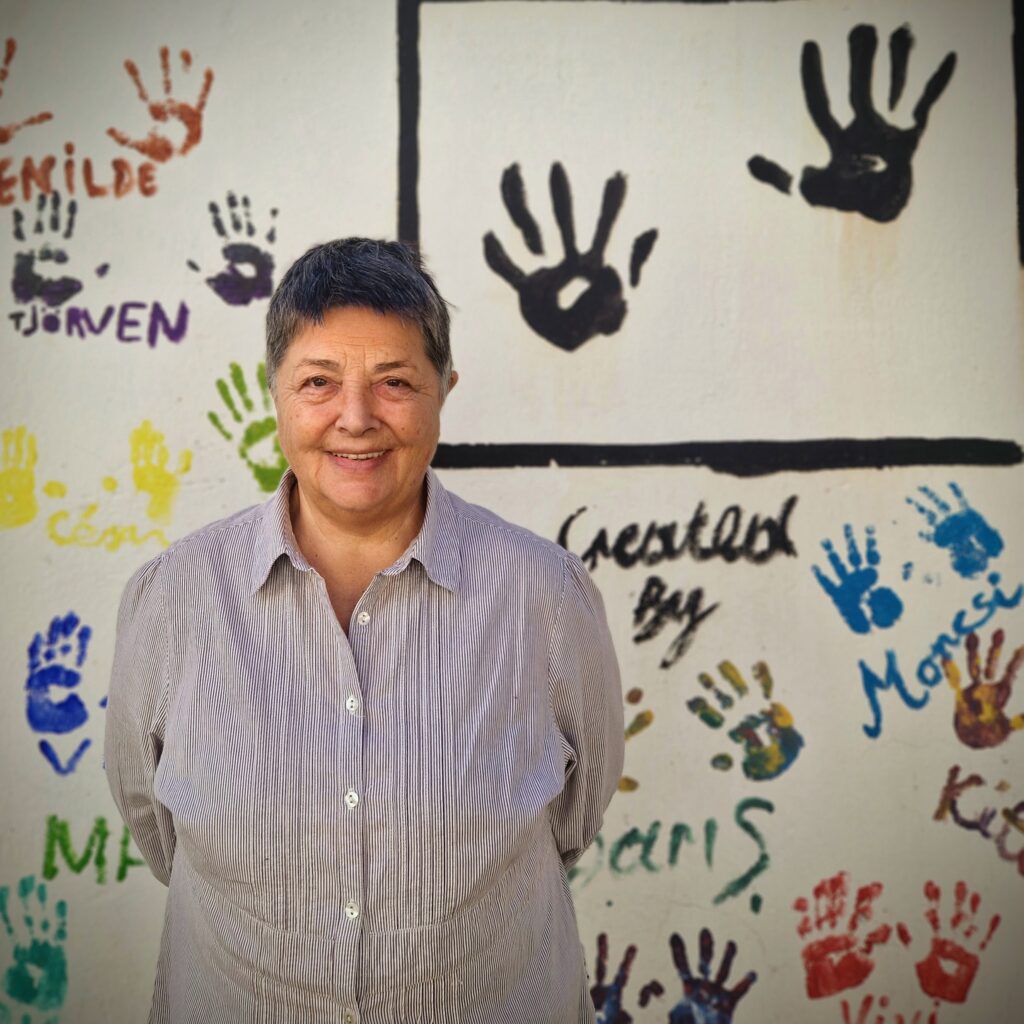

The Hold My Hand Foundation in Pécs has been supporting adults with intellectual disabilities since 1991. Its goal is to provide assistance that nurtures independence while upholding human dignity. Gitta Szvacsekné Jahn explained how this is achieved.
The idea behind the Hold My Hand Foundation
Whenever she returns to the daycare center, to this day she is greeted by the Youngsters’ beaming eyes and their loud cries of “Hi, Gitta!”
Gitta refers to herself not as a founder, but rather as the initiator of the idea. She began her career as a teacher, then in the late 1980s took on volunteer work in the field of elder care. It was during this period that she first experienced institutional coldness and later discovered similar inadequacies in the care provided to young people with disabilities.
Akkoriban a rendszert a nagylétszámú állami intézmények uralták, és sok szülőben merült fel a kérdés: „Mi lesz, amikor a gyermekem befejezi az iskolát?” – Ez a tapasztalat hatással volt Gitta kialakuló szemléletmódjára: „szakmai szempontból mindig azt mondtuk: ameddig lehet, maradjon a Fiatal családi közegben. Ha pedig felnőtté válik, a szakembernek, pedagógusnak a szülővel együtt kell segíteni a leválást, a felnőtté válást.”
Building on this idea, they launched the foundation in 1991 together with a few parents and professionals.Célunk az volt, hogy a tömeges állami ellátással ellentétben emberközpontú, személyre szabott támogatást nyújtsunk.”
In view of this, the structure of the emerging community was guided by the principle that Youngsters come first, followed by parents, and only then professionals – all working together as equal partners.
The first steps with the Youngsters
To put this approach into practice, the team of founders began working with the Youngsters – focusing on questions such as: “Who am I? What is my dream? What do I want?”– The Youngsters picked up this way of thinking quite easily, but the process was more difficult for the parents; they were used to a different mindset.
Youngsters picked up this way of thinking quite easily, but the process was more difficult for the parents; they were used to a different mindset. hozzászoktak, hogy mivel a gyermekük sérült, nekik kell irányítani: nemcsak kiszolgálni őt, de egyben döntéseket is hozni helyette. Az alapítvány szakemberei viszont azt szerették volna, ha „a Fiatal önállóságra nevelődik.”
Gitta úgy fogalmaz, végül a Fiatalokon keresztül szelídítették meg őket, de eleinte kettős érzés volt a szülőkben. Egyrészt örültek, hogy a gyerekük fejlődik, és hálásak voltak, hogy jó közegben tudhatták, míg ők a figyelmüket a munkájukra fordították. Másrészt ugyanakkor féltették is a gyereküket, és sok esetben ellenállásnak élték meg, hogy már nem igényli az irányításukat. Ez főként olyan helyzetekben nyilvánult meg, mint a napi rutinnal járó döntések: „mi azt tanítottuk: ha kicsit lassabb is így a folyamat, engedjük meg a Fiatalnak, hogy maga döntsön, milyen ruhát vesz fel, vagy mikor kel.”
To help parents process the difficulties that come with their child becoming an adult, Gitta and her colleagues organized conferences for them. Over time, not only the Youngsters and professionals, but the parents’ own development also became visible: “little by little, they reached a point where letting go of their disabled child became less painful.” Gitta emphasizes that the trauma an average parent experiences when letting go of their adult child “never truly disappears in the case of parents raising a disabled child. Parents are often even more vulnerable than the Youngsters themselves.”.”
“School for Parents”
The founding team’s goal was for the Youngsters to feel valued, while the parents would learn to accept that their child with disabilities was no longer a child anymore.
Gitta believes that, partly due to a shortage of professionals, the field pays far too little attention to parents, who, in her view, “deserve much more positive reinforcement, even from the state,” considering the difficulties that come with their situation.
„“They carry this burden for decades. It can be eased, but later in life, as the parent retires, they often relive the experience of exclusion: they no longer go to work, they have fewer community connections, and because of this, it becomes even harder to let go of their ‘child.’””
Continuous learning also plays an important role – not only for the Youngsters, but for the parents as well: “they reinterpret their role, their love, and the ways in which they can support, rather than restrict, their adult child.”
If she could start over, Gitta says she would involve parents more deeply in the life of the foundation, in the form of a kind of “school for parents,” through which she would want “not to raise them, but rather to accompany them.” ” She imagines something “dynamic, alive, and genuinely helpful in processing everyday life.”
Independence, Responsibility, Diversity
As the foundation’s operations became more established, “the world changed as well. In the 2000s, more and more supported independent living homes were created” – and the Hold My Hand Foundation was among the first to join this movement.
A támogatott lakhatás lényege, hogy a Fiatal függetlenül élhet, és csak akkor kap segítséget, ha szüksége van rá. Ez nem napi felügyeletet jelent, hanem támogatást, ami bármikor elérhető. „Ez óriási lépés volt az önállóság felé, ugyanakkor nehéz is, mert a döntés joga a Fiatalé, de a felelősség végső soron mindig a segítőké. Ezt a kettősséget – a szabadság és a felelősség egyensúlyát – ebben a szakmában nagyon nehéz megtalálni.”
A függetlenedési folyamat mellett a fejlődés kulcsa Gitta szerint az is, ha a Fiatal felismeri, nemcsak neki vannak nehézségei: mindenki küzd valamivel. „Én is felfedtem előttük a saját gyengeségeimet, így tanultuk meg együtt, hogy teljesen normális, hogy különbözőek vagyunk. Ez a mai napig az alapítvány filozófiája. A cél mindig az volt, hogy a pozitívumokra építsünk, de ne essünk át a ló túloldalára: ne legyen pozitív diszkrimináció sem. A lényeg az egyensúly, a partnerség megtartása.”
“Not a Profession, but a Calling”
By now, the foundation’s team has grown into a close-knit community. They regularly organize shared events – cooking gatherings, excursions, holiday celebrations – where the Youngsters, parents, and professionals can all spend time together.
Gitta számára nagy öröm, hogy továbbra is kapcsolatban maradt a Fiatalok mellett az alapítvány vezetőségével és munkatársaival is: „néha tudok olyan nézőpontot adni nekik, ami segít a munkában. Huszonhét évet dolgoztam itt, azóta sok minden változott, de ez nem baj, a közösségek fejlődése általában hullámokban történik. Mindig is úgy éreztem, hogy ez nem egy szakma, hanem küldetés. Azt hiszem, ezért tudtam ennyi éven át benne maradni; mert minden nap adott valami örömet, valami újat. Ha nehéz is volt, soha nem éreztem tehernek.”
Úgy gondolja, az egyik legfontosabb ebben a munkában megtanulni, hogy „a segítő feladata nem az, hogy megoldja a másik helyett az életet, hanem hogy teret adjon neki a hibákra, a döntésekre, a növekedésre.” A fejlődést szerinte alapvetően nem a képességek megléte, hanem a biztonságérzetet adó, elfogadó közeg teszi lehetővé.
“Now, when I look back, I see that what truly matters is human connection. Not the institution, not the system, but the moment when someone smiles at you, holds your hand, or simply sits beside you and listens. These are the moments that carry people forward. This is what we always tried to preserve. Even the name ‘Hold My Hand’ (Fogd A Kezem) was not accidental. It does not mean ‘I will lead you,’ but rather ‘I am here beside you.’ If needed, I will help – but if you are able to walk on your own, I will let go of your hand.”
Felidézve az alapítvány történetével kapcsolatos emlékeit, eszébe jut egy pillanat: „egyszer egy Fiatal, Gergő, aki alig beszélt, egy hét után odajött hozzám, és csak annyit mondott: ’Szeretek itt lenni.’ És én tudtam, hogy ennyi elég. Nem kellett több visszajelzés. Ezért érdemes csinálni.”